Illinois · Wisconsin · Michigan · Indiana
HOA insurance for large associations that insure buildings
Property, general liability and D&O for HOAs that insure their buildings: condo and townhome communities, often hundreds of units across multiple buildings. Community associations are all we insure.
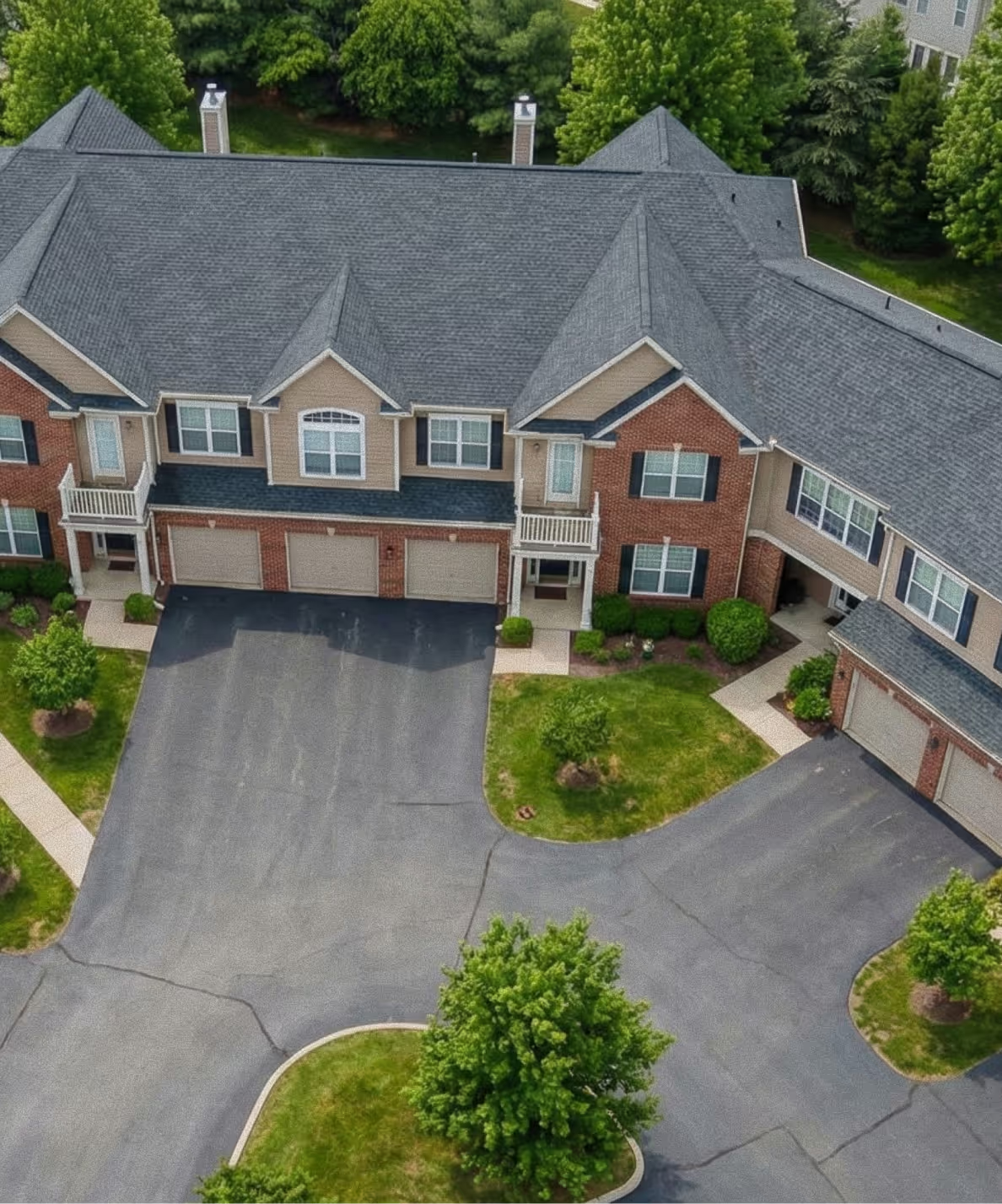
Three associations we've worked with
Each one is a real engagement. Smaller communities are welcome too.

Coverage analysis: roof valuation and deductibles
Replacement coverage after a nonrenewal
Renewal review: a 3% or 4% wind and hail deductible
Coverage, line by line
What HOA insurance covers
| Coverage | What it pays for | Why size changes the answer | What to check in a proposal |
|---|---|---|---|
| Property | Damage to the buildings and common property the association has to insure: roofs, exteriors, clubhouse, pool, and, depending on your declaration, parts of every unit. | One hailstorm can reach every building at once, so limits and the wind and hail deductible matter as much as the premium. | Replacement cost or actual cash value on roofs, the limit for each building, cosmetic damage exclusions, ordinance or law cover, every deductible. |
| General liability | Claims from people hurt or property damaged on common ground: a fall on an icy walkway, an accident at the pool. | More residents, guests and amenities mean more chances for a claim. | The per-occurrence limit, and whether every location and amenity is actually scheduled. |
| Directors and officers (D&O) | Defense costs and settlements when owners, vendors or employees sue the board over its decisions. | Bigger budgets and bigger assessments lead to bigger disputes, and volunteers can be named personally. | Whether it covers the property manager and committee volunteers, and claims that demand action rather than money. |
| Crime and fidelity | Theft of association money by an employee, a board member or a management company. | Large associations hold large operating and reserve balances, and lenders and state law often require this cover. | That the limit reaches the most money the association holds at any one time, reserves included. |
| Umbrella or excess liability | Extra limits that sit above general liability, employer's liability and sometimes D&O. | A single serious injury can run past a primary limit. | Which policies it sits over, and whether it follows their terms. |
| Workers' compensation | Work injuries to the association's own employees, such as a maintenance worker hurt on the job. | Larger communities are more likely to have maintenance staff, door staff or a site manager on payroll. | Who is actually on the association's payroll, and certificates of insurance from every contractor. |
| Equipment breakdown | Sudden mechanical or electrical failure of boilers, elevators, HVAC and electrical panels. | Mid-rise and high-rise buildings run on shared systems that one failure can stop. | Whether it's built into the property policy or written separately. |
| Flood and earthquake | Losses that standard property forms exclude, written as separate policies. | The more buildings you have, the more likely one sits near a mapped flood zone. | What your lender and your declaration require, building by building. |
A general guide to homeowners association insurance coverage, not policy wording. Coverage is governed by each policy's terms, conditions and exclusions.
Not every association needs all eight, and others will need more. Good HOA insurance coverage has each line there on purpose, with limits that match the property.
D&O for a volunteer board
Board members can be sued over decisions they made as unpaid volunteers, and D&O insurance for association boards pays for the defense. A good policy also covers former directors and committee volunteers, and responds to claims demanding action, not just money.
What the law and your lenders require
Three things set the minimum: your governing documents, your state's law, and the lenders your owners borrow from.
Association or owner?
Where the association's policy stops and the owner's begins
In an HOA of detached homes, owners insure their own houses and the association insures common areas. An HOA like that usually carries a liability-only policy, and it isn't our focus. In condos and townhomes, the master policy insures the buildings, and the declaration says how far inside each home that cover reaches. Three common arrangements:
Bare walls
The association insures the structure. Owners insure nearly everything inside it.
Single entity
The association also insures the unit as it was originally built.
All-in
The association insures the unit, upgrades included.
These labels are not standardized, so we read your governing documents rather than the label. Owners need their own policy, usually an HO-6, for everything on their side. The goal is no gap between the two.
Deductibles
Your wind and hail deductible, in dollars
A percentage deductible is a percentage of the insured value, not of the claim, and many forms calculate it per building. A storm that reaches six buildings can mean a deductible on each one.
The table shows what the association pays before the policy pays, for one building at four values.
| Building insured value | 2% | 3% | 4% | 5% |
|---|---|---|---|---|
| $2,000,000 | $40,000 | $60,000 | $80,000 | $100,000 |
| $5,000,000 | $100,000 | $150,000 | $200,000 | $250,000 |
| $10,000,000 | $200,000 | $300,000 | $400,000 | $500,000 |
| $25,000,000 | $500,000 | $750,000 | $1,000,000 | $1,250,000 |
A higher deductible is not always wrong. One 495-unit association was offered renewals at 3% or 4%, and the 4% option cost $64,598 less per year. Its 18 buildings average about $7.4 million each, so each extra point adds about $74,000 to what the association pays on a damaged building. The board chose 4% with both numbers in front of it.
Experience you can see.
Comparing the coverage behind the premium
Two proposals treated roofs and deductibles differently. DCI presented the coverage differences, coordinated the selected policy, and checked the location schedule after issuance.
Rebuilding coverage after nonrenewal
An open claim and underwriting restrictions complicated the search for replacement insurance. DCI pursued separate property and liability placements and followed through until both policies were issued.
Comparing a $64,598 premium difference and a higher deductible
DCI questioned inconsistent building limits and obtained corrected renewal options. The board received a comparison showing a $64,598 premium difference between 3% and 4% wind/hail deductibles, then selected the 4% option.
These examples describe specific engagements. Available coverage, policy terms, and results vary by association and insurer. Coverage is governed by the applicable policy terms, conditions, and exclusions.
A smarter path to better insurance.
Meet us. Know the plan.
Get to know our team, understand our approach, and determine if we're the right fit for your association. We'll learn about your community, existing insurance program, challenges, and priorities.

Take control of your insurance information.
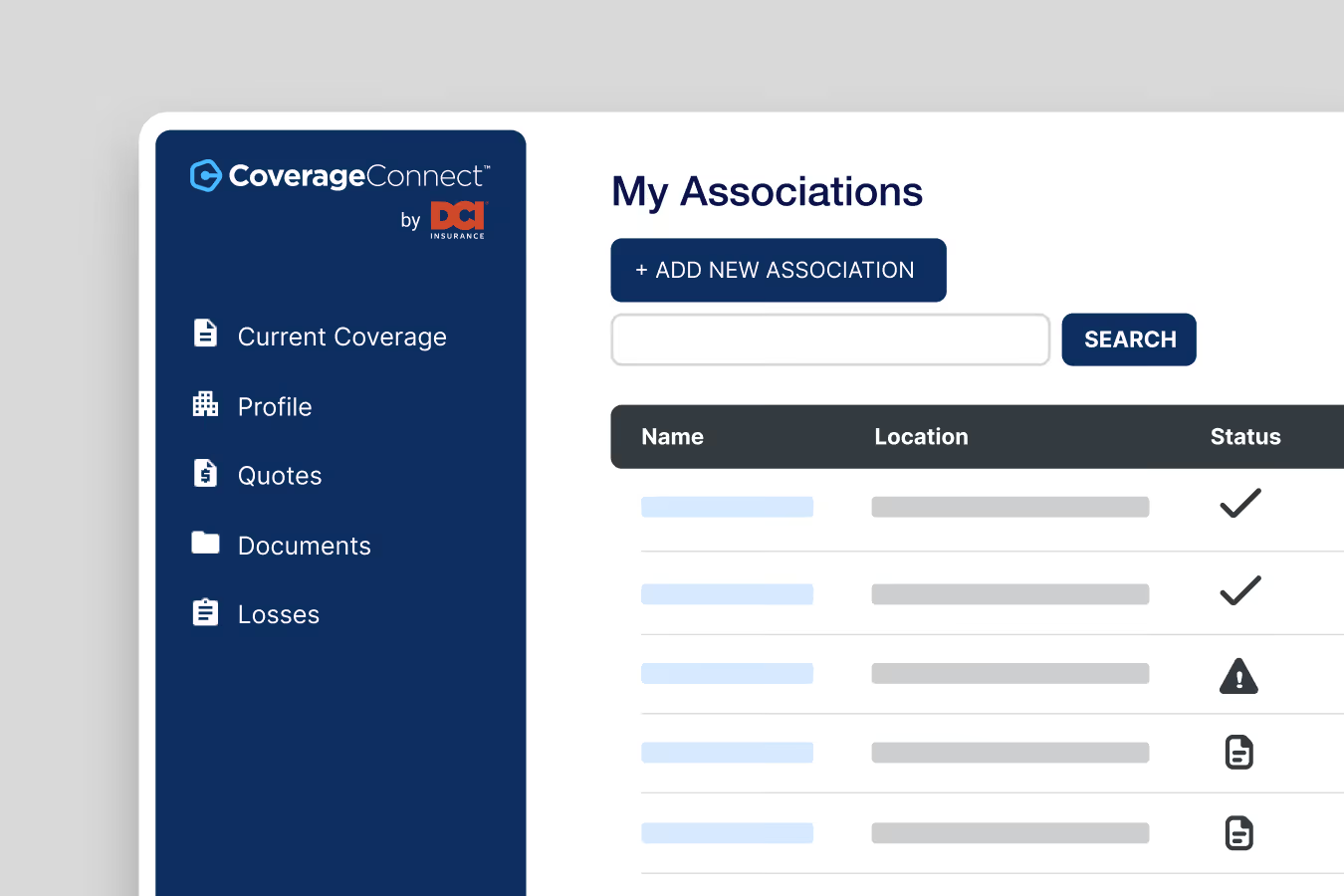
Through CoverageConnect, we organize and preserve your association's property details, insurance information, loss history, and important documents. This creates a centralized source of information, improves transparency, and gives us a head start on every renewal.

Use data to drive competition.
We combine your association's information with insurance market data and trends to develop a targeted marketing strategy. We identify suitable insurance companies, create competition where possible, and negotiate competitive coverage and pricing.

Compare options. Make informed decisions.
We present the available options in a clear, easy-to-understand format, explaining differences in coverage, deductibles, pricing, and important policy conditions. Our goal is to help your board understand its options and make confident decisions.

Your partner beyond the policy.
Our involvement doesn't end when coverage is placed. We coordinate binding, review issued policies for accuracy, assist with insurance company requirements, and remain available to help your association navigate questions and changes throughout the year.
Who we're built for
Where we do our best work
Associations with 100+ units, multiple buildings, a master policy in the tens of millions, and a renewal that needs more than a premium comparison.
We also work with smaller communities, from a 3-unit condo building to a 1,000-unit association.

Condominium associations
Master policies for shared structures, from walk-ups to multi-building complexes.

Townhome associations
Attached rows where roofs and exteriors can fall on either side of the line.
Homeowners associations
HOAs whose master policy insures the buildings, not only the common ground.

Co-ops
Coverage that reflects how cooperative ownership actually works.
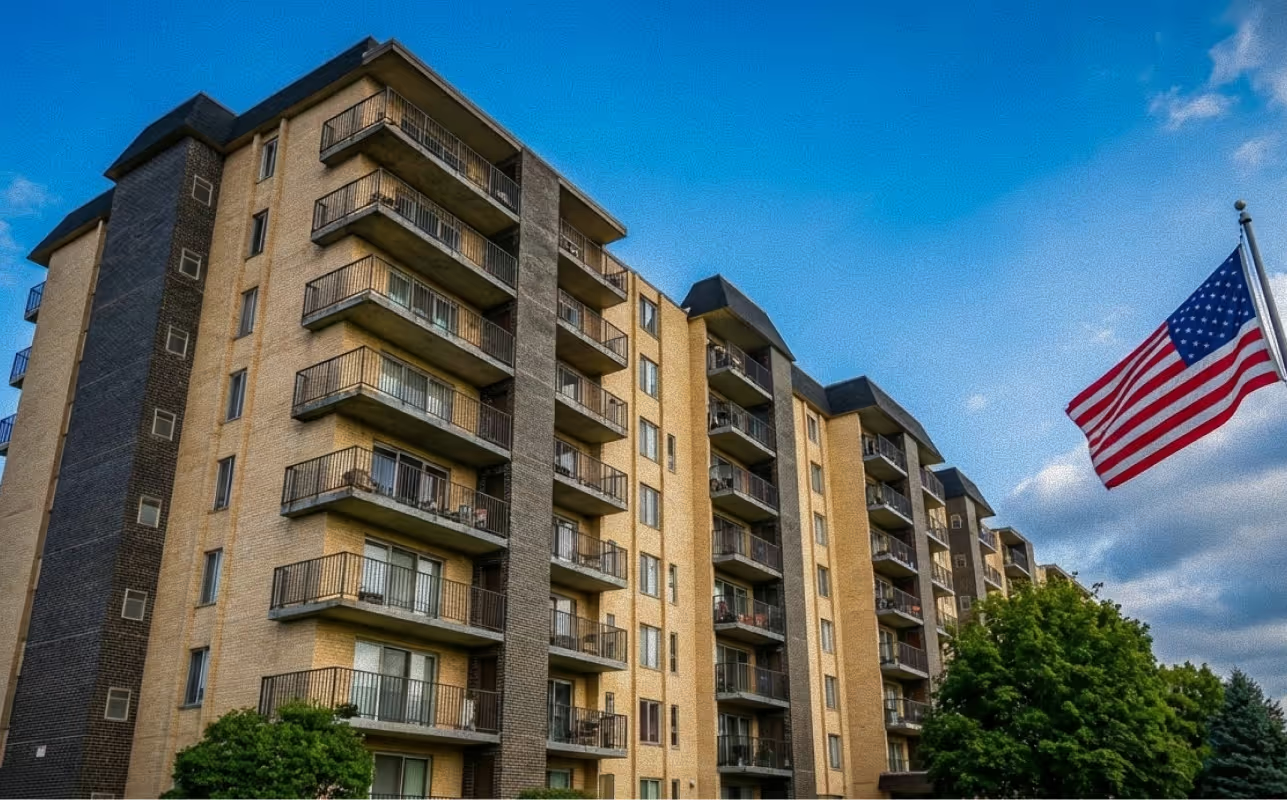
Real people who pick up the phone
Third-generation, family-owned. We insure only community associations, and you reach a licensed team member, not a call center. Licensed in Illinois, Wisconsin, Michigan and Indiana.
Those four states hold roughly 39,550 associations and 7.5 million residents, by the Foundation for Community Association Research's 2025 count. Illinois alone accounts for about 19,850.




Community Associations Institute, Illinois chapter

The national association for independent insurance agents

Independent agents pledged to a national standard of conduct

Team members hold CIC, CRM, CPRM and/or CISR designations
The people you know. The details in one place.
Your program, visible between renewals
CoverageConnect keeps documents and renewal status accessible between conversations.
Managers track quotes, pull policy documents, and request certificates of insurance without waiting on an email.

Let us talk about your community
Tell us about your association and upcoming renewal. Our team will review the information and help you understand the next steps.
Ste 13291
Chicago, Illinois 60605
Bedford Park Illinois 60499-2150
Prefer to write first? Send us the basics:
HOA insurance questions from boards and managers
Most associations carry a master property policy, general liability and D&O coverage, plus crime or fidelity coverage for the money they hold and workers' compensation if they have employees. Umbrella, equipment breakdown, flood and earthquake depend on the property. Your declaration, your state's law and your owners' lenders set the minimums.
It depends on building values, roof age, location, loss history, limits and, above all, deductibles, so an average would mislead you. One real example: a 495-unit, 18-building association with about $133 million of building value was quoted $354,373 a year at a 3% wind and hail deductible and $289,775 at 4%, roughly $716 or $585 per unit.
They can be sued personally over decisions they made for the association, even as unpaid volunteers, and a defense costs money even when the claim fails. D&O insurance pays for that defense and for covered settlements, which is why we include it in our standard recommendations. Check that it also covers former directors, committee members and the property manager.
Whoever your declaration makes responsible for it. In some townhome associations the master policy insures roofs and exteriors; in others each owner insures the whole building. Read the declaration's insurance and maintenance sections together, because a mismatch between them can leave a roof claim with nobody to pay it.
It depends on who insures the structure. If the master policy covers the building, the owner usually needs an HO-6 for the interior, belongings and personal liability. If the owner insures the whole building, the owner needs a standard homeowners policy, usually an HO-3.
HOA insurance is bought by the association for what it owns or has to insure: common areas, shared structures, the board and the association's money. Homeowners insurance is bought by each owner for their own home or unit, belongings and personal liability. The two should meet at the line your declaration draws, with no gap.
Start 90 to 120 days before your policy expires. That leaves time to gather loss runs, approach the market and present a comparison to the board. If you've received a nonrenewal notice, send it to us with its effective date right away.
Yes. We can review your coverage now, point out any gaps and plan the move for your next renewal, or sooner if there's a reason to. Many property managers ask for a comparison before renewal just to see what's available, with no obligation to switch.
Bring us your next renewal